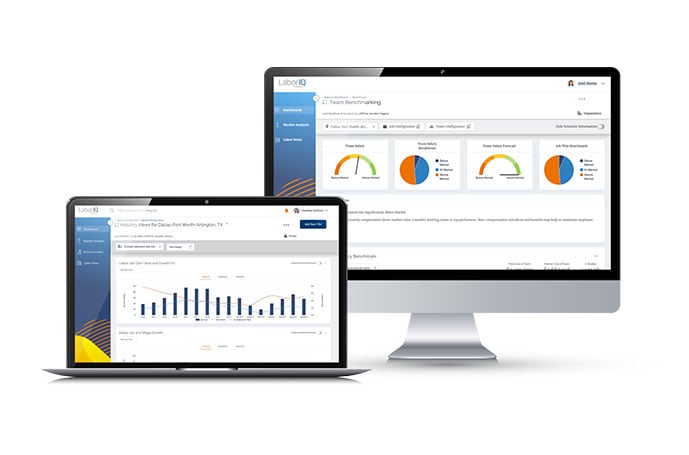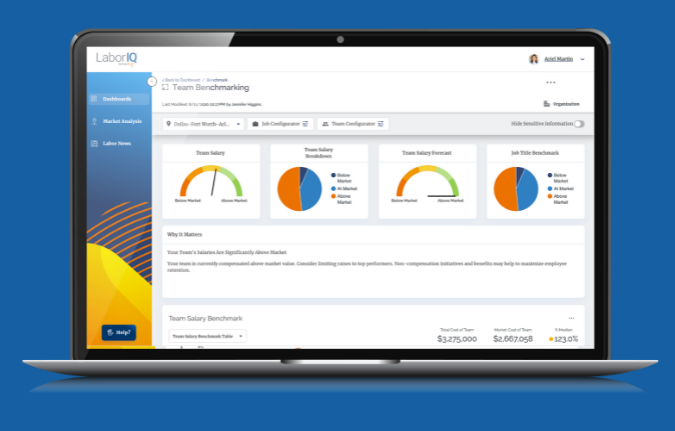
🚀 Now available! Analyze workforce pay alignment with Pay Analysis™!

Learn More
LaborIQ

Compensation | Featured | Human Resources | Salary Benchmarking | November 1, 2023

Setting Salary Ranges in a Changing Labor Market

Are current market-competitive salaries not aligned with your expectations of what you should pay employees?  

Or does one of the below situations sound familiar to you ❔ 

  • Wild swings in the job market made it impossible to keep pay competitive against competitors.  
  • You interviewed many candidates who were a great fit, but you were not able to offer their desired salary and lost them to another offer.  
  • You made offers to new hires that far exceeded the salaries of current employees in those same roles. 
  • Salary transparency legislation has made it difficult to post salary ranges competitive enough to interest candidates and not upset existing employees. 

A recent article published by the Wall Street Journal states the so-called Job-Market Boom Is Over. Salaries are finally starting to normalize and come down from record highs. This pendulum of salary changes has left many businesses at a loss for setting salary ranges to create a consistent compensation strategy. 

Most companies establish pay ranges to ensure a fair and equitable pay system for their employees. As your company grows, this can become incredibly important to help combat equal pay claims and develop clear and communicable pay structures, especially as you employ more than one person in the same role.  

It doesn’t have to be complicated to set salary ranges for your jobs and doing so can give you clear guidelines to follow during merit planning, hiring and backfilling roles.  

Start by downloading our step-by-step ranking and job grading template and follow the steps below: 


Step 1: Set your goals and get prepared 

Determine your organization’s goals for setting salary ranges. For example, an employer can choose to lead, lag or match the market when compensating employees. Before you get started, use this tool to align your company’s overall compensation strategy 

Whichever philosophy is decided, get alignment and executive buy-in before setting salary ranges.  

Job responsibilities and requirements are the most crucial factors to understand value and pay requirements. You will need each of your jobs well documented with accurate job descriptions to get started. 

Step 2: Rank Jobs using a job evaluation method 

Next in establishing pay structures is to evaluate the makeup of your jobs and determine how you will assign a value to each one. There are accepted practices and methods for how to go about this process.  

Below, we will step through several methods used for internal job evaluations. Most of the time these approaches are broken into two categories, analytical and non-analytical. 

  • Analytical – Jobs are evaluated by segmenting by the core components of that job and viewed separately from the job itself. Often this is a preferred method as it can provide defense in a claim against equal pay. 
  • Point-Factor Rating Method: Each job is broken down into core competencies, which are described as compensable factors. These factors are assessed separately, and points are allocated according to the level needed for the job. Often more advanced jobs will have a higher points value.  
  • Factor Comparison Method: Like a point rating system, as each role is segmented into factors, but no points are given.  


Point-Factor Rating Method Example:
  

  • Non-Analytical – Each job is holistically viewed. This is often a less objective approach that is simpler, more cost-effective and less time-consuming. 
  • Ranking Method: Each job within the organization is ranked based on how its responsibilities relate to other jobs, value-wise. This is often used by small companies with fewer redundancies in each job. If this is the first time you are setting salary ranges, this is a good place to start.  
  • Job classification or Grading Method: Jobs are categorized into ‘grades’ by evaluating the job skills and responsibilities, experience and requirements of each role. Usually, the company will pre-determine several grades and then categorize their jobs within those grades. Often wider salary ranges are necessary to accommodate distinct roles in the same grade. 

 TIP: We recommend selecting one approach to evaluate all jobs or at least narrow your approach by job family. This ensures consistency in how you determine the value of each role and a fair and equitable pay structure for your employees.  

The Ranking Method and Grading Method are often used together. Jobs are ranked first in comparison to each other and then grouped together to establish grades and pay ranges. Use our template to create yours.  

 Step 3: Market Pricing 

Before grouping or categorizing your jobs (if you choose to do so), you will want to ensure you are market-competitive in your salaries.  

We recommend running a job-specific compensation analysis to ensure you accurately base your newly created salary ranges on today’s market rates.  

Some things to take into consideration when running a comp analysis:  

  • Know the accuracy of your market salary benchmarks. Not all compensation data is created equal. 
  • Evaluate by job title and ensure you are looking at job responsibilities to confirm you are comparing the right job (job titles vary greatly between companies).  

For a quick guide to running a compensation analysis, see our template here.

Completing a compensation analysis for each unique job will allow you to easily determine grade levels and a salary range appropriate for those grades. As you establish these target-market salaries for each job title, keep in mind your organization’s pay philosophy (lead, lag or match the market). 

TIP: If your organization is still small, it is sometimes appropriate to just apply a salary range to the target market salary for each role. This is especially appropriate if there are few employees occupying the same position. If this sounds like your organization, skip to Step 5. 

Step 4: Job Grades 

Once you have completed your analysis and set a target salary for each job title, you may decide to group some jobs together and create job grades before setting salary ranges.  

This really depends on how large your organization is and the redundancies you have across roles. To do this, you will group your jobs by looking at positions that rank most closely together in comparison with each other, but also share similar market salaries based on the compensation analysis that was completed and the target market salary for each job title.  

It is completely up to you as to how many or how few pay grades you put in place. The smaller your company, the fewer grades you may choose to have. A small company may have only 4 grades, whereas much larger organizations may elect to have closer to 15.  

TIP: Do not group job titles within the same salary grade that also have a market salary of greater or less than 15% from one another. This will ensure there is not a job title that is under-or-over-weighted in your salary grade, as you set salary ranges. 

 Step 5: Creating the Salary Range 

Now that you have target market salaries for each job title and you have grouped your job titles into salary grades, you can establish salary ranges for each grade. It is common that salary ranges are 30 percent to 35 percent, but you may find that more advanced roles (executive level, for example) have a broader range, which can be greater than a range of 40 percent. 

To establish a simple salary range, use the average of the target market salaries for each job title within a job grade as the midpoint and calculate the minimum and maximum salaries for the established salary range.  

As an example, here are the formulas for a 30 percent salary range using the target market salary average as the midpoint: 

  • Midpoint = Target Market Salary Average (for all jobs that are defined in the job grade) 
  • Minimum Salary = Midpoint x 0.85  
  • Maximum Salary = Midpoint x 1.15                            

TIP: Using the Setting Salary Ranges Template linked in this article will calculate all your Job Grade Salary Ranges for you. This will make it super easy to aggregate and analyze your results.  

As you review your new salary grades, if you notice that your new salary ranges overlap, that is okay. Overlapping salary ranges will make it easier to manage internal promotions without larger salary increases between grades.  

Step 6: Action Items 

Now that you have established your salary ranges and completed a compensation analysis for your employees and jobs, you may have some actions to take. If you are lucky, all your employees are paid within their salary range and have competitive market compensation; however, this is hardly ever the case.

So now what? 

The first thing you need to determine is if any employees are paid above or below the salary ranges that have been established for their job grade. There are different actions taken given each of the circumstances below.  

  • Employees with salaries below job grade salary ranges:  
  • Evaluate if there is a mismatch in job title or grade that must be considered. Take appropriate actions to communicate any job title/responsibility changes.  
  • Provide pay increases to bring salaries within the job grade salary range.  
  • Beware of providing pay increases to underperformers. If an employee is not performing to the expectations of the position that they currently occupy, it is important to clearly communicate expectations and timelines for achievement.
  • Employees with salaries above job grade salary ranges: Offer a one-time bonus to reward top performers instead of increasing base pay during merit planning season. 
  • Reduce the employees’ base pay to bring it within the job grade salary range but beware of the impact on employee morale and risk of turnover.  
  • Evaluate opportunities for employee development through certifications and training opportunities that allow the employee to upskill and advance in the role and subsequently job pay grade.  
  • Refrain from offering further base pay increases. Ensure that you clearly communicate this decision to all parties.   

Having an agreed-upon compensation philosophy and documented salary ranges for each role ensures pay equity within your organization. Setting pay ranges can give you flexibility (within guidelines) when it comes to determining what to pay employees, what to offer new hires, and how employees can progress in their careers. 

Clear communication around your processes for how you approach compensation can boost retention and help you better plan for merit increases and new hires.   


Related Posts

Explore The Latest With Labor IQ

A smartphone showing an AI assistant chat lies on a printed pay range chart, with one salary range circled in red ink beside a red marker.

September 18, 2026

Why AI Assistants Get Salary Questions Wrong

Compensation Salary Benchmarking
Overhead flat lay on a white desk showing an open laptop with a soft pale interface, a blank paper wall calendar, a white mug, folded glasses and a grey notebook.

September 16, 2026

Model Memory vs Live Data: What Your AI Does Not Know About Pay

Compensation Salary Benchmarking
Two colleagues seated across a small meeting room table, mid-discussion, with a closed laptop and two coffee cups between them.

September 14, 2026

How to Evaluate a Compensation Data Provider

Compensation Salary Benchmarking
An open laptop on a bright meeting room table showing an AI assistant conversation beside a live data chart, with a notebook, pen and coffee cup on the table.

August 31, 2026

What Is an MCP Server? A Guide for HR and Compensation Teams

Compensation Human Resources
A compensation analyst at a desk in a modern office reviewing pay data across two monitors, one showing a table of salary figures and the other a bar chart of wage trends.

August 27, 2026

Compensation Analysis: The Complete Guide for HR Teams

Compensation Salary Benchmarking
Two open laptops and printed bar charts on a desk, with a person writing notes beside them.

May 8, 2026

What Is a Compensation Benchmarking Strategy

Compensation Pay Equity Salary Benchmarking
A software engineer looking at tech compensation data with a colleague

April 28, 2026

How to Conduct a Pay Equity Audit

Compensation Human Resources Pay Equity
Woman Implementing Employee Merit Cycles

April 14, 2026

A Guide To Understanding Salary Range Percentiles

Employee Retention Salary Benchmarking
Compensation Guide Featured Image

April 13, 2026

A Guide to Compensation Cycles for 2026

Compensation
Hardworking executives casual office.

April 10, 2026

Compensation Philosophy Examples from a Variety of Industries

Compensation
Businesswoman presenting the employee annual incentive plan

January 23, 2026

HR Guide to Employee Annual Incentive Plans: Structure, Design, and Implementation

Compensation
A large red percent symbol resting on paperwork next to a calculator on a wooden desk.

January 14, 2026

How to Run Employee Merit Cycles: An Easy Planning Guide for HR Managers

Compensation
Focused executives casual office.

November 20, 2025

Total Compensation Guide: How to Calculate It and How It Differs from Base Salary

Compensation
Focused women executives casual office.

November 12, 2025

AI-Generated Compensation Data: Navigating Accuracy Risks in the Age of Quick Answers 

Compensation
Hardworking executives casual office.

November 5, 2025

HR Trends to Watch in 2026: Compensation Strategy, Talent Retention, and Transparency 

Human Resources
Focused women executives casual office.

October 29, 2025

Comprehensive Guide to Pay Philosophy Development and Compensation Structure Design

Compensation
Hardworking executives casual office.

October 21, 2025

Compensation Data Privacy: Best Practices for Secure Access and Management

Compensation Human Resources
Happy executives casual office.

October 13, 2025

The Hidden Risks of Crowd-Sourced Compensation Data: Why Accurate Market Intelligence Matters

Salary Benchmarking
Which Compensation. Featured image for the LaborIQ article How to Use Compensation Market Analysis to Backfill a Position.

October 11, 2025

How to Use Compensation Market Analysis to Backfill a Position

Compensation
workers discussing reports

July 18, 2025

HR Best Practices: Building Effective Compensation Structures for Operational Excellence

Compensation Salary Benchmarking
Featured image for the LaborIQ article Best Practices for Developing and Managing Pay Bands.

July 2, 2025

Best Practices for Developing and Managing Pay Bands

Salary Benchmarking Compensation
Featured image for the LaborIQ article U.S. Pay Transparency Laws: State-by-State Impact on Business Operations and HR Compliance.

June 18, 2025

U.S. Pay Transparency Laws: State-by-State Impact on Business Operations and HR Compliance 

Compensation Labor Market Reports
Pay band—manage pay bands in one place.

May 28, 2025

What is a Pay Band?

Salary Benchmarking Compensation
Pay Band Manager Illustration.

May 21, 2025

Pay Bands vs. Pay Ranges: Strategic Distinctions for Modern HR Management 

Salary Benchmarking Compensation
Featured image for the LaborIQ article Compensation Software: Strategic Technology for Modern HR Excellence.

May 13, 2025

Compensation Software: Strategic Technology for Modern HR Excellence

Compensation Pay Equity
Brand Reputation and Employee Experience Impact Recruitment Success.

April 29, 2025

Strategic Pay Setting: The Critical Role of Location, Experience, and Job Title in U.S. Compensation 

Compensation
Tall stacks of coins in front of a city skyline, overlaid with a rising line graph.

April 17, 2025

The Hidden Cost of Incorrect Employee Pay: Impact on Organizations

Compensation Employee Retention
Focused women executives casual office.

March 25, 2025

Pay Band Management: Scaling Compensation Operations for Modern HR Excellence 

Salary Benchmarking Compensation
Hardworking executives casual office.

March 7, 2025

6 reasons why getting salaries correct is crucial for HR teams

Compensation Salary Benchmarking
Gen Z Entering Workforce.

February 14, 2025

Organizational Pay Analysis: Strategic Foundation for HR Excellence and Budget Optimization

Salary Benchmarking Pay Equity
Header graphic for November Insights Newsletter.

November 25, 2024

Compensation Data is The Key to Pay Transparency

Compensation
Labor Market Revisions Newsletter.

August 26, 2024

Labor market revisions finally reflect reality

Salary Benchmarking

August 15, 2024

Where do U.S. workers increase their wages the fastest?

Salary Benchmarking
Header graphic for July Jobs Report.

August 2, 2024

July Jobs Report Hiring slowdown, here’s what that means for employers

Featured Hiring Labor Market Reports
Job candidates waiting for interview.

July 24, 2024

Why Finding A New Job Is So Hard Right Now

Featured Hiring Labor Market Reports
Header graphic for June Jobs Report.

July 9, 2024

June Jobs Report Is the jobs report finally catching up to reality?

Featured Hiring Labor Market Reports
Adding Additional Role Details.

June 26, 2024

Simplifying Pay Bands with LaborIQ: A Step-by-Step Guide

Featured Hiring
Header graphic for May 2024 Jobs Report.

June 7, 2024

May Jobs Report Is the labor market as strong as headline numbers suggest?

Featured Hiring Labor Market Reports
Header graphic for April Jobs Report.

May 6, 2024

Hiring slows in April, healthcare dominates

Featured Hiring Labor Market Reports
Featured image for the LaborIQ article What are recession chances in 2024?

April 24, 2024

What are recession chances in 2024?

Featured Human Resources
Header graphic for March Insights.

March 28, 2024

Keys to a Winning Compensation Strategy

Compensation Featured Human Resources
What makes a good job description.

February 19, 2024

What makes a good job description?✍️

Compensation Featured Human Resources
Compensation for in demand jobs.

January 26, 2024

Understanding pay for in-demand jobs

Compensation Featured Human Resources
2023 Year in Review.

December 22, 2023

2023 Year in Review

Compensation Featured Human Resources
Pay Bumps for Hires.
November 17, 2023

Pay Bumps for New Hires

Compensation Featured Human Resources

November 1, 2023

Setting Salary Ranges in a Changing Labor Market

Compensation Featured Human Resources Salary Benchmarking
Comp Philosophy. Featured image for the LaborIQ article 10 Questions to Set Your Compensation Philosophy.

October 30, 2023

10 Questions to Set Your Compensation Philosophy

Compensation Employee Retention
Featured image for the LaborIQ article LaborIQ Announces Referral Partnership with Paycor.

September 14, 2023

LaborIQ Announces Referral Partnership with Paycor

Featured
Featured image for the LaborIQ article 2026 Compensation Benchmarking Guide (+ Template).

August 29, 2023

2026 Compensation Benchmarking Guide (+ Template)

Compensation Employee Retention
Tall stacks of coins in front of a city skyline, overlaid with a rising line graph.

August 18, 2023

Not All Compensation Data Is Equal

Compensation Featured
Featured image for the LaborIQ article Know Your Company’s Compensation Health Score?

August 11, 2023

Know Your Company’s Compensation Health Score?

Compensation Featured Human Resources
A metal label holder on a red filing drawer, labeled Secrets.

July 7, 2023

Concealing Compensation: How It Impacts Your Business & Employees

Compensation Human Resources
Featured image for the LaborIQ article Understanding Pay Bands in Compensation Structures.

June 23, 2023

Closing the Pay Gap: Strategies for Achieving Pay Transparency in the Workplace

Pay Equity Salary Benchmarking
How to Calculate. Featured image for the LaborIQ article How to Calculate a Market-Based Salary to Attract Top Talent.

June 20, 2023

How to Calculate a Market-Based Salary to Attract Top Talent

Compensation Featured Hiring
Featured image for the LaborIQ article A Boomer’s Reflections on the Business Impact of Remote Work.

June 19, 2023

A Boomer’s Reflections on the Business Impact of Remote Work

Compensation Featured Hiring
Happy executives casual office.

May 4, 2023

The Costs of Keeping Compensation a Secret

Compensation
White News Linkd In Post.

April 18, 2023

Circa Announces LaborIQ Compensation Solution

Compensation Featured
Featured image for the LaborIQ article More than 1 Million Jobs Added in 2023.

April 7, 2023

More than 1 Million Jobs Added in 2023

Featured Labor Market Reports
The word unemployment above a rising zigzag arrow and percent symbols on a teal background.

March 20, 2023

How Does The Unemployment Rate Affect Hiring?

Hiring Human Resources
Wooden blocks spelling inflation, stacked with red arrows pointing upward.

March 8, 2023

Inflation: What Does It Mean for the Job Market?

Featured Labor Market Reports
Return to Office Impact.

February 15, 2023

Returning to the Office in 2023

Human Resources
Role of Backfilling. Featured image for the LaborIQ article The Role of Backfilling Jobs and Compensation.

February 6, 2023

The Role of Backfilling Jobs and Compensation

Compensation
Featured image for the LaborIQ article What SB 1162 Pay Transparency Legislation Means for Your Organization.

December 22, 2022

What SB 1162 Pay Transparency Legislation Means for Your Organization

Compensation Pay Equity
Featured image for the LaborIQ article 5 Keys to 2023 Compensation Planning.

December 21, 2022

5 Keys to 2023 Compensation Planning

Compensation
Pay Transparency. Featured image for the LaborIQ article Pay Transparency Laws Force Employers to Address Pay Parity.

December 13, 2022

Pay Transparency Laws Force Employers to Address Pay Parity

Compensation
Webinar Replay. Featured image for the LaborIQ article Webinar Replay: 2023 Hiring Outlook.

December 7, 2022

Webinar Replay: 2023 Hiring Outlook

Compensation Hiring
Featured image for the LaborIQ article 7 of 10 Workers Likely to Demand the Top of the Salary Range.

November 29, 2022

7 of 10 Workers Likely to Demand the Top of the Salary Range

Compensation Hiring
Do You Trust. Featured image for the LaborIQ article Do You Trust Your Compensation Data?

October 24, 2022

Do You Trust Your Compensation Data?

Compensation Employee Retention Hiring
The Boomerang. Featured image for the LaborIQ article The Boomerang Employee: Rehiring Former Talent.

October 18, 2022

The Boomerang Employee: Rehiring Former Talent

Hiring Human Resources
Featured image for the LaborIQ article Why Retaining HR Professionals Is a Wise Move.

September 27, 2022

Why Retaining HR Professionals Is a Wise Move

Employee Retention Human Resources
Featured image for the LaborIQ article Inflation: How It Impacts Working Parents and Child Care Costs.

September 19, 2022

Inflation: How It Impacts Working Parents and Child Care Costs

Compensation Labor Market Reports
Job Swimming. Featured image for the LaborIQ article Job Swimming: Meeting Expectations.

September 16, 2022

Job Swimming: Meeting Expectations

Compensation Hiring
Featured image for the LaborIQ article 2026 Compensation Benchmarking Guide (+ Template).

September 16, 2022

Do you need a compensation solution?

Compensation Employee Retention Hiring
Featured image for the LaborIQ article A Guide to Supporting Laid Off Employees.
September 14, 2022

A Guide to Supporting Laid Off Employees

Compensation Human Resources
Featured image for the LaborIQ article A Step-by-Step Guide to the Compensation Planning Process.

August 16, 2022

A Step-by-Step Guide to the Compensation Planning Process

Compensation
Featured image for the LaborIQ article What is Compensation Analysis?

August 9, 2022

What is Compensation Analysis?

Compensation
Compensation Guide Featured Image

August 4, 2022

Compensation Benchmarking: Your Questions Answered

Compensation
Featured image for the LaborIQ article Show Me the Money: Pay Transparency Pros and Cons.
July 1, 2022

Show Me the Money: Pay Transparency Pros and Cons

Compensation
Proactive Steps. Featured image for the LaborIQ article Proactive Steps to Prepare for New Pay Transparency Laws.

July 1, 2022

Proactive Steps to Prepare for New Pay Transparency Laws

Compensation Pay Equity
Featured image for the LaborIQ article Overcoming Compensation Management Challenges.

June 16, 2022

Overcoming Compensation Management Challenges

Compensation
Removing Bias. Featured image for the LaborIQ article Removing Bias From Your Compensation Planning.

June 13, 2022

Removing Bias From Your Compensation Planning

Compensation
The Ins and. Featured image for the LaborIQ article The Ins and Outs of Salary Benchmarking.

June 10, 2022

The Ins and Outs of Salary Benchmarking

Compensation
More Than. Featured image for the LaborIQ article It’s More Than Money: Attracting Top Talent Beyond Compensation.

June 8, 2022

It’s More Than Money: Attracting Top Talent Beyond Compensation

Compensation
Featured image for the LaborIQ article Leveraging Technology in Your HR Restructuring Strategies.

May 23, 2022

Leveraging Technology in Your HR Restructuring Strategies

Human Resources
Everything You. Featured image for the LaborIQ article Everything You Need to Know About Compensation Analysis.

May 11, 2022

Everything You Need to Know About Compensation Analysis

Compensation
Featured image for the LaborIQ article It’s That Time Again! Bring on the Mid-Year Compensation Reviews.

April 25, 2022

It’s That Time Again! Bring on the Mid-Year Compensation Reviews

Compensation Human Resources
Break Free. Featured image for the LaborIQ article Break Free From Spreadsheets.

April 22, 2022

Break Free From Spreadsheets

Human Resources

April 5, 2022

Counter Offering the Counteroffer

Compensation Hiring
Featured image for the LaborIQ article Returning to the Office: Risks and Benefits.

March 31, 2022

Returning to the Office: Risks and Benefits

Human Resources

March 1, 2022

The Annual Increase Percentage: Why 2022 Is Different

Compensation
Featured image for the LaborIQ article Competing Against More Than Pay.

February 15, 2022

Competing Against More Than Pay

Hiring Human Resources
Must Have. Featured image for the LaborIQ article 4 Must-Have Books, Podcasts and Tools for HR Pros.

February 2, 2022

4 Must-Have Books, Podcasts and Tools for HR Pros

Human Resources
Featured image for the LaborIQ article Reduce HR Costs with Hyper Automation.

January 3, 2022

Reduce HR Costs with Hyper Automation

Human Resources
Key Factors. Featured image for the LaborIQ article Key Factors in Determining the Right Salary Offer.

August 25, 2021

Key Factors in Determining the Right Salary Offer

Compensation