🚀 Now available! Analyze workforce pay alignment with Pay Analysis™!

Learn More
LaborIQ

Salary Benchmarking | Compensation | May 21, 2025

Pay Bands vs. Pay Ranges: Strategic Distinctions for Modern HR Management 

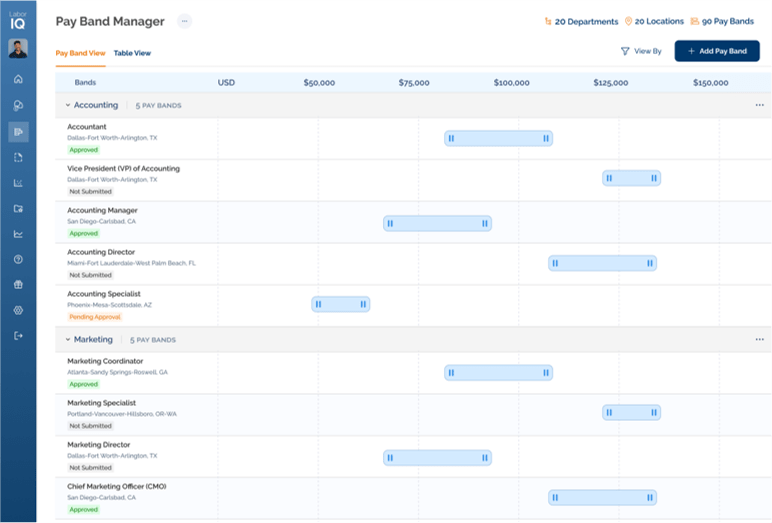
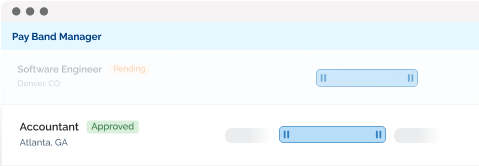
Pay Band Manager Illustration.

Pay bands and pay ranges represent fundamentally different approaches to compensation structure design, each offering distinct advantages for talent management, budget planning, and organizational flexibility. While often used interchangeably, these compensation frameworks require different implementation strategies, management approaches, and administrative capabilities. This article examines the critical distinctions between pay bands and pay ranges, providing HR professionals with strategic guidance for selecting and implementing the optimal compensation structure for their organizational needs. 

Defining Pay Bands vs. Pay Ranges 

Pay Ranges: Traditional Grade-Based Structure 

Pay ranges represent traditional compensation structures that establish specific salary minimums, midpoints, and maximums for individual job grades or positions. Each role typically has a dedicated range with clearly defined boundaries, creating distinct compensation levels across the organization. Pay ranges typically span 40-60% from minimum to maximum, with midpoints anchored to market rates. 

Pay Bands: Broad-Based Compensation Framework 

Pay bands encompass broader salary spans that cover multiple job levels, functions, or career stages within a single structure. These wider bands, often spanning 100-200% from minimum to maximum, provide greater flexibility for career progression and role evolution without requiring grade changes. Pay bands consolidate traditional pay grades into fewer, more comprehensive categories. In today’s pay transparency requirements, pay band disclosures are required in job postings. 

Strategic Implications for HR Departments 

Administrative Complexity and Management 

Pay ranges require more intensive administrative management due to their granular nature, with organizations typically maintaining 15-25 distinct pay grades. Each range requires individual market benchmarking, regular updates, and specific approval processes for salary adjustments. 

Pay bands simplify administration by reducing the number of compensation structures to manage, typically requiring only 5-8 broad bands to cover entire organizations. This consolidation reduces administrative burden while providing greater flexibility for compensation decisions. 

Career Progression and Employee Development 

Traditional pay ranges often create artificial barriers to career development, requiring formal promotions and grade changes for meaningful salary increases. This structure can limit retention options and create bureaucratic obstacles to recognizing employee growth. 

Pay bands enable organic career progression within the same compensation structure, allowing salary increases that reflect expanding responsibilities, skill development, and performance improvements without formal reclassification processes. 

Recruiting Strategy Implications 

Candidate Attraction and Offer Flexibility 

Pay ranges provide clear, specific compensation boundaries that can simplify offer development but may limit negotiation flexibility. Recruiters working within narrow pay ranges may struggle to accommodate exceptional candidates or competitive market pressures. 

Pay bands offer superior recruiting flexibility, enabling competitive offers across a broader salary spectrum while maintaining internal equity. This flexibility proves particularly valuable in competitive talent markets where rapid offer adjustments may be necessary to secure top candidates. 

Market Positioning and Competitive Response 

Organizations using pay ranges must frequently update multiple grade structures to maintain market competitiveness, creating administrative complexity and potential inconsistencies across roles. 

Pay bands allow companies to adjust to market shifts more easily, reducing the need for constant structural updates while maintaining salary competitiveness. This flexibility enables more agile competitive positioning and faster response to market pressures. 

Retention Strategy Considerations 

Recognition and Reward Flexibility 

Pay ranges can limit retention options when employees approach range maximums, creating challenges for retaining high performers without promotion opportunities. This constraint often forces organizations into difficult choices between retention and budget discipline. 

Pay bands provide extensive retention flexibility through their broader salary spans, enabling meaningful increases for high performers while maintaining structural integrity. This capability proves essential for retaining critical talent in competitive markets. 

Performance Management Integration 

Traditional pay ranges often struggle to accommodate significant performance differentials within the same role, potentially undermining performance management effectiveness. 

Pay bands naturally support performance-based differentiation through their wider spans, enabling substantial salary differences that reflect varying contribution levels while maintaining role consistency. 

Budget Setting and Financial Planning 

Predictability and Cost Control 

Pay ranges provide clear budget boundaries and predictable cost structures, simplifying financial planning and budget development. Finance teams can model costs accurately based on defined grade structures and progression assumptions. 

Pay bands require more sophisticated budget modeling due to their flexibility, but offer greater adaptability to changing business needs and market conditions. Organizations must invest in advanced analytics to manage budget implications effectively. 

Salary Increase Planning 

Range-based structures enable precise salary increase planning through defined progression steps and clear advancement paths. However, this precision can become inflexibility when market conditions change rapidly. 

Band-based structures require more strategic salary increase planning but provide superior adaptability to evolving business priorities and market demands. 

Implementation Considerations 

Technology and System Requirements 

Pay ranges integrate easily with traditional HRIS systems and require minimal technological sophistication for effective management. Most legacy systems support range-based compensation administration effectively. 

Pay bands benefit from advanced compensation management technology that can handle complex band administration, market analysis, and decision-support capabilities. Organizations should invest in sophisticated platforms to maximize band effectiveness. 

Manager Training and Decision-Making 

Range-based structures provide clear guidelines that simplify manager decision-making but may limit managerial flexibility in addressing unique circumstances. 

Band-based structures require more extensive manager training and decision-making frameworks but enable greater responsiveness to individual employee needs and market dynamics. 

Strategic Recommendations 

Organizations should select pay bands when prioritizing flexibility, career development, and market responsiveness. Companies operating in dynamic industries or competitive talent markets often benefit from band-based approaches that enable rapid adaptation. 

Pay ranges remain optimal for organizations prioritizing administrative simplicity, cost predictability, and traditional career progression models. Regulated industries or organizations with limited compensation management capabilities may prefer range-based structures. 

Conclusion 

The distinction between pay bands and pay ranges represents a fundamental strategic choice that impacts every aspect of compensation management. HR professionals must carefully evaluate their organizational needs, administrative capabilities, and strategic priorities when selecting between these approaches. While pay bands offer superior flexibility and market responsiveness, pay ranges provide some simplicity and cost predictability. The optimal choice depends on organizational maturity, industry dynamics, and long-term talent management objectives. 

Sources for this article include: 

  • WorldatWork: https://www.worldatwork.org 
  • Society for Human Resource Management (SHRM): https://www.shrm.org 
  • HR technology vendors’ best practices documentation 
  • Professional compensation management publications and journals 

Related Posts

Explore The Latest With Labor IQ

Two colleagues seated across a small meeting room table, mid-discussion, with a closed laptop and two coffee cups between them.

September 14, 2026

How to Evaluate a Compensation Data Provider

Compensation Salary Benchmarking
An open laptop on a bright meeting room table showing an AI assistant conversation beside a live data chart, with a notebook, pen and coffee cup on the table.

August 31, 2026

What Is an MCP Server? A Guide for HR and Compensation Teams

Compensation Human Resources
A compensation analyst at a desk in a modern office reviewing pay data across two monitors, one showing a table of salary figures and the other a bar chart of wage trends.

August 27, 2026

Compensation Analysis: The Complete Guide for HR Teams

Compensation Salary Benchmarking
Two open laptops and printed bar charts on a desk, with a person writing notes beside them.

May 8, 2026

What Is a Compensation Benchmarking Strategy

Compensation Pay Equity Salary Benchmarking
A software engineer looking at tech compensation data with a colleague

April 28, 2026

How to Conduct a Pay Equity Audit

Compensation Human Resources Pay Equity
Woman Implementing Employee Merit Cycles

April 14, 2026

A Guide To Understanding Salary Range Percentiles

Employee Retention Salary Benchmarking
Compensation Guide Featured Image

April 13, 2026

A Guide to Compensation Cycles for 2026

Compensation
Hardworking executives casual office.

April 10, 2026

Compensation Philosophy Examples from a Variety of Industries

Compensation
Businesswoman presenting the employee annual incentive plan

January 23, 2026

HR Guide to Employee Annual Incentive Plans: Structure, Design, and Implementation

Compensation
A large red percent symbol resting on paperwork next to a calculator on a wooden desk.

January 14, 2026

How to Run Employee Merit Cycles: An Easy Planning Guide for HR Managers

Compensation
Focused executives casual office.

November 20, 2025

Total Compensation Guide: How to Calculate It and How It Differs from Base Salary

Compensation
Focused women executives casual office.

November 12, 2025

AI-Generated Compensation Data: Navigating Accuracy Risks in the Age of Quick Answers 

Compensation
Focused women executives casual office.

October 29, 2025

Comprehensive Guide to Pay Philosophy Development and Compensation Structure Design

Compensation
Hardworking executives casual office.

October 21, 2025

Compensation Data Privacy: Best Practices for Secure Access and Management

Compensation Human Resources
Happy executives casual office.

October 13, 2025

The Hidden Risks of Crowd-Sourced Compensation Data: Why Accurate Market Intelligence Matters

Salary Benchmarking
Which Compensation. Featured image for the LaborIQ article How to Use Compensation Market Analysis to Backfill a Position.

October 11, 2025

How to Use Compensation Market Analysis to Backfill a Position

Compensation
workers discussing reports

July 18, 2025

HR Best Practices: Building Effective Compensation Structures for Operational Excellence

Compensation Salary Benchmarking
Featured image for the LaborIQ article Best Practices for Developing and Managing Pay Bands.

July 2, 2025

Best Practices for Developing and Managing Pay Bands

Salary Benchmarking Compensation
Featured image for the LaborIQ article U.S. Pay Transparency Laws: State-by-State Impact on Business Operations and HR Compliance.

June 18, 2025

U.S. Pay Transparency Laws: State-by-State Impact on Business Operations and HR Compliance 

Compensation Labor Market Reports
Pay band—manage pay bands in one place.

May 28, 2025

What is a Pay Band?

Salary Benchmarking Compensation
Pay Band Manager Illustration.

May 21, 2025

Pay Bands vs. Pay Ranges: Strategic Distinctions for Modern HR Management 

Salary Benchmarking Compensation
Featured image for the LaborIQ article Compensation Software: Strategic Technology for Modern HR Excellence.

May 13, 2025

Compensation Software: Strategic Technology for Modern HR Excellence

Compensation Pay Equity
Brand Reputation and Employee Experience Impact Recruitment Success.

April 29, 2025

Strategic Pay Setting: The Critical Role of Location, Experience, and Job Title in U.S. Compensation 

Compensation
Tall stacks of coins in front of a city skyline, overlaid with a rising line graph.

April 17, 2025

The Hidden Cost of Incorrect Employee Pay: Impact on Organizations

Compensation Employee Retention
Focused women executives casual office.

March 25, 2025

Pay Band Management: Scaling Compensation Operations for Modern HR Excellence 

Salary Benchmarking Compensation
Hardworking executives casual office.

March 7, 2025

6 reasons why getting salaries correct is crucial for HR teams

Compensation Salary Benchmarking
Gen Z Entering Workforce.

February 14, 2025

Organizational Pay Analysis: Strategic Foundation for HR Excellence and Budget Optimization

Salary Benchmarking Pay Equity
Header graphic for November Insights Newsletter.

November 25, 2024

Compensation Data is The Key to Pay Transparency

Compensation
Labor Market Revisions Newsletter.

August 26, 2024

Labor market revisions finally reflect reality

Salary Benchmarking

August 15, 2024

Where do U.S. workers increase their wages the fastest?

Salary Benchmarking
Header graphic for March Insights.

March 28, 2024

Keys to a Winning Compensation Strategy

Compensation Featured Human Resources
What makes a good job description.

February 19, 2024

What makes a good job description?✍️

Compensation Featured Human Resources
Compensation for in demand jobs.

January 26, 2024

Understanding pay for in-demand jobs

Compensation Featured Human Resources
2023 Year in Review.

December 22, 2023

2023 Year in Review

Compensation Featured Human Resources
Pay Bumps for Hires.

November 17, 2023

Pay Bumps for New Hires

Compensation Featured Human Resources

November 1, 2023

Setting Salary Ranges in a Changing Labor Market

Compensation Featured Human Resources Salary Benchmarking
Comp Philosophy. Featured image for the LaborIQ article 10 Questions to Set Your Compensation Philosophy.

October 30, 2023

10 Questions to Set Your Compensation Philosophy

Compensation Employee Retention
Featured image for the LaborIQ article 2026 Compensation Benchmarking Guide (+ Template).

August 29, 2023

2026 Compensation Benchmarking Guide (+ Template)

Compensation Employee Retention
Tall stacks of coins in front of a city skyline, overlaid with a rising line graph.

August 18, 2023

Not All Compensation Data Is Equal

Compensation Featured
Featured image for the LaborIQ article Know Your Company’s Compensation Health Score?

August 11, 2023

Know Your Company’s Compensation Health Score?

Compensation Featured Human Resources
A metal label holder on a red filing drawer, labeled Secrets.

July 7, 2023

Concealing Compensation: How It Impacts Your Business & Employees

Compensation Human Resources
Featured image for the LaborIQ article Understanding Pay Bands in Compensation Structures.

June 23, 2023

Closing the Pay Gap: Strategies for Achieving Pay Transparency in the Workplace

Pay Equity Salary Benchmarking
How to Calculate. Featured image for the LaborIQ article How to Calculate a Market-Based Salary to Attract Top Talent.

June 20, 2023

How to Calculate a Market-Based Salary to Attract Top Talent

Compensation Featured Hiring
Featured image for the LaborIQ article A Boomer’s Reflections on the Business Impact of Remote Work.

June 19, 2023

A Boomer’s Reflections on the Business Impact of Remote Work

Compensation Featured Hiring
Happy executives casual office.

May 4, 2023

The Costs of Keeping Compensation a Secret

Compensation
White News Linkd In Post.

April 18, 2023

Circa Announces LaborIQ Compensation Solution

Compensation Featured
Role of Backfilling. Featured image for the LaborIQ article The Role of Backfilling Jobs and Compensation.

February 6, 2023

The Role of Backfilling Jobs and Compensation

Compensation
Featured image for the LaborIQ article What SB 1162 Pay Transparency Legislation Means for Your Organization.

December 22, 2022

What SB 1162 Pay Transparency Legislation Means for Your Organization

Compensation Pay Equity
Featured image for the LaborIQ article 5 Keys to 2023 Compensation Planning.

December 21, 2022

5 Keys to 2023 Compensation Planning

Compensation
Pay Transparency. Featured image for the LaborIQ article Pay Transparency Laws Force Employers to Address Pay Parity.

December 13, 2022

Pay Transparency Laws Force Employers to Address Pay Parity

Compensation
Webinar Replay. Featured image for the LaborIQ article Webinar Replay: 2023 Hiring Outlook.

December 7, 2022

Webinar Replay: 2023 Hiring Outlook

Compensation Hiring
Featured image for the LaborIQ article 7 of 10 Workers Likely to Demand the Top of the Salary Range.

November 29, 2022

7 of 10 Workers Likely to Demand the Top of the Salary Range

Compensation Hiring
Do You Trust. Featured image for the LaborIQ article Do You Trust Your Compensation Data?

October 24, 2022

Do You Trust Your Compensation Data?

Compensation Employee Retention Hiring
Featured image for the LaborIQ article Inflation: How It Impacts Working Parents and Child Care Costs.

September 19, 2022

Inflation: How It Impacts Working Parents and Child Care Costs

Compensation Labor Market Reports
Job Swimming. Featured image for the LaborIQ article Job Swimming: Meeting Expectations.

September 16, 2022

Job Swimming: Meeting Expectations

Compensation Hiring
Featured image for the LaborIQ article 2026 Compensation Benchmarking Guide (+ Template).

September 16, 2022

Do you need a compensation solution?

Compensation Employee Retention Hiring
Featured image for the LaborIQ article A Guide to Supporting Laid Off Employees.

September 14, 2022

A Guide to Supporting Laid Off Employees

Compensation Human Resources
Featured image for the LaborIQ article A Step-by-Step Guide to the Compensation Planning Process.

August 16, 2022

A Step-by-Step Guide to the Compensation Planning Process

Compensation
Featured image for the LaborIQ article What is Compensation Analysis?

August 9, 2022

What is Compensation Analysis?

Compensation
Compensation Guide Featured Image

August 4, 2022

Compensation Benchmarking: Your Questions Answered

Compensation
Featured image for the LaborIQ article Show Me the Money: Pay Transparency Pros and Cons.

July 1, 2022

Show Me the Money: Pay Transparency Pros and Cons

Compensation
Proactive Steps. Featured image for the LaborIQ article Proactive Steps to Prepare for New Pay Transparency Laws.

July 1, 2022

Proactive Steps to Prepare for New Pay Transparency Laws

Compensation Pay Equity
Featured image for the LaborIQ article Overcoming Compensation Management Challenges.

June 16, 2022

Overcoming Compensation Management Challenges

Compensation
Removing Bias. Featured image for the LaborIQ article Removing Bias From Your Compensation Planning.

June 13, 2022

Removing Bias From Your Compensation Planning

Compensation
The Ins and. Featured image for the LaborIQ article The Ins and Outs of Salary Benchmarking.

June 10, 2022

The Ins and Outs of Salary Benchmarking

Compensation
More Than. Featured image for the LaborIQ article It’s More Than Money: Attracting Top Talent Beyond Compensation.

June 8, 2022

It’s More Than Money: Attracting Top Talent Beyond Compensation

Compensation
Everything You. Featured image for the LaborIQ article Everything You Need to Know About Compensation Analysis.

May 11, 2022

Everything You Need to Know About Compensation Analysis

Compensation
Featured image for the LaborIQ article It’s That Time Again! Bring on the Mid-Year Compensation Reviews.

April 25, 2022

It’s That Time Again! Bring on the Mid-Year Compensation Reviews

Compensation Human Resources

April 5, 2022

Counter Offering the Counteroffer

Compensation Hiring

March 1, 2022

The Annual Increase Percentage: Why 2022 Is Different

Compensation
Key Factors. Featured image for the LaborIQ article Key Factors in Determining the Right Salary Offer.

August 25, 2021

Key Factors in Determining the Right Salary Offer

Compensation