
Over the past couple of years, much has been written about how work is changing, with a particular focus on remote working. Interestingly, between 2019 and 2021, the number of people working from home tripled to 17.9% in the U.S. That’s almost 28 million people, according to data released by the U.S. Census Bureau.
Many employees embraced the shift to both remote and hybrid working. It’s well-documented that employees want and expect greater flexibility in their work location as well as working conditions. For example, a McKinsey report found that when offered the opportunity to work flexibly, 87% of U.S. employees accept, with 58% already working from home at least once a week.
However, in 2023 we expect the labor market to swing, so it’s slightly more in favor of employers. As a result, we may see a shift toward employers placing greater demands on employees – including encouraging them to return to the office.
So, with that said, this post examines what employees and employers want concerning remoted/hybrid/in-office working, possible solutions and generational differences.
There’s lots to cover, so let’s get started!
Employee vs. Employer Preferences
The aforementioned McKinsey report found that 13% of respondents said that while they were permitted to work some of the time remotely, they chose not to do so. Similarly, a Slack study reported that just 12% of employees would opt to work full-time in the office.
However, it’s becoming clear that many business leaders are instructing employees to return to the office five days a week. In fact, new research from Microsoft found that around 50% of employers want their employees to return full-time.
Since Labor Day, reports show that the percentage of workers returning to the office has increased. For example, keycard property management company, Kastle Systems, reported office usage in 10 major New York metro areas was almost 50% of pre-pandemic levels. However, this statistic doesn’t include data from some of the city’s larger real estate firs. So it could, in fact, be higher.
Elsewhere, General Motors generated headlines with its back-to-the-office mandate in late 2022. However, following a worker backlash, the company took a softer approach, stating workers wouldn’t be required to return until around the first quarter of 2023.
Earlier in 2022, Elon Musk hit the headlines after demanding that Tesla employees return to the office or be fired. Similarly, David Solomon, Goldman Sachs CEO, called remote work an “aberration.” Also, in January 2023, Starbucks said its U.S. support center staff had to work at least three days a week in the office vs. a previously agreed one day a week.
On top of that, research by Resume Builder found that nine in 10 employers are taking a more hardline approach to getting workers back into the office. As many as 21% say they’ll fire employees if they don’t return.
Needless to say, this push for employees to come back into the office is at odds with the above-quoted statistics about what workers actually want.
The result? This could potentially mean organizations lose talent, resulting in skills shortages. In contrast, a more flexible approach could be the difference between finding and retaining the right talent.

There Is a Middle Ground
Rather than shoehorning employees into a working model they’ve potentially outgrown, employers could look for a compromise. After all, if employees aren’t happy with their working arrangement, they may still vote with their feet. For example, 66% would start looking for employment elsewhere if a company removed a working-from-home option, while 39% would quit.
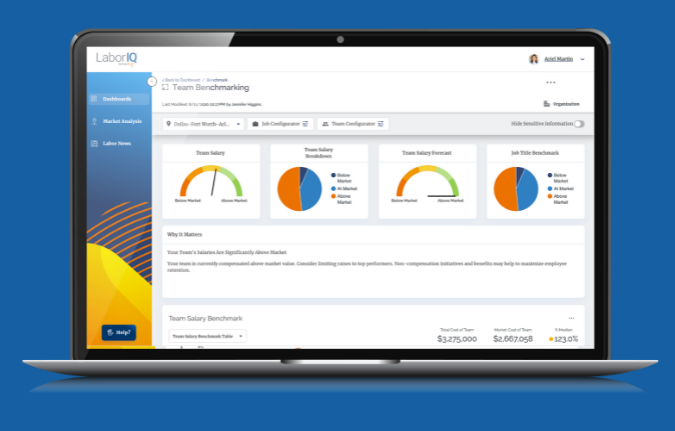
This begs the question, how do employers take a softer approach to get workers back into the office? Labor IQ’s, Labor Market Analytics reports can help employers with options that provide a more collaborative approach. Primarily, the data in these reports help employers to identify attractive compensation plans. These could include offering incentives to return to the office, such as raises, catered meals, financial support for the commute, improved mental health and well-being programs, health insurance, etc.
It’s also worth noting that employees prefer choice. For example, one Slack study found that 72% of employees surveyed would enjoy a mix of remote and office work. With this in mind, employers could consider offering a hybrid working arrangement rather than adopting a harsh approach to getting employees back through the office door.
If you’re unfamiliar with hybrid working, this is where employees are required to work in the office just a few days a week. For example, three days in the office and two days remotely. One study found that 76% of companies will use this model in 2023, with only 11% taking an office-first approach and 9% a fully remote approach.
Generational Differences
At this point, it’s worth highlighting that there are generational disparities when it comes to returning to the office. However, the statistics on this subject can vary:
For example, let’s talk about Gen Z, who by 2030, will make up around 30% of the workforce. A report by Aquent found that they, above all other generations, believe remote working inhibits their career prospects (77%). However, compared to baby boomers, only 46% believe this to be the case, with just 39% of millennials and 44% of Generation X taking the same stance.
The reason for this difference of opinion could be that those who have been in the workplace longer have fostered greater connections, and their careers are also more well-established.
Other studies support this, finding that different generations value different aspects of office life. For example, younger workers miss the social element of working in an office, attending events and talks, free coffee and more.
The Bottom Line
If employers want their offices populated again, perhaps a more targeted approach to enticing workers back is needed. For example, tailoring their approach to different generations after surveying their workers to get a feel for their expectations. This, coupled with offering incentives so the benefits of working in the office outweigh the pull of remote work, would greatly increase employee goodwill. As a result, businesses are less likely to lose valuable and skilled talent.