
Developing a comprehensive pay philosophy and compensation structure design lays the foundation for strategic talent management, directly impacting organizational success through improved hiring efficiency, enhanced employee retention, and sustained employee engagement. Modern HR departments must establish clear compensation frameworks that balance market competitiveness with internal equity while fostering transparency and supporting business objectives.
This guide has been created as a company leadership and HR resource for creating pay philosophies, implementing structured compensation systems, and leveraging technology solutions to optimize talent management outcomes.
Foundations of Pay Philosophy Development
Strategic Alignment and Organizational Context
Effective pay philosophy development begins with a comprehensive assessment of organizational strategy, culture, and competitive positioning. HR teams must align compensation approaches with business objectives, ensuring that pay practices support long-term organizational success while reflecting company values and market realities.
For example, knowing how a company wishes to compete for talent within a “percentile” of the average of a role, department, or company-wide philosophy of how they want to compensate their employees.
Key Strategic Considerations:
- Business strategy alignment and competitive positioning requirements
- Organizational culture and values integration into compensation practices
- Market positioning philosophy (lead, match, or lag market rates)
- Total rewards philosophy encompassing base salary, incentives, and benefits
- Geographic considerations for multi-location organizations
- Industry-specific factors and regulatory compliance requirements
A clear pay philosophy establishes the foundation for consistent, defensible compensation decisions that promote pay equity, internal fairness, and market competitiveness. Organizations that clearly articulate pay philosophies and educate employees on how pay decisions are made, trust from employees tends to increase by 10%.
Market Research and Competitive Analysis
Comprehensive market research forms the foundation of effective pay philosophy development. HR teams must gather extensive data from multiple sources to ensure accurate market positioning and competitive compensation offerings.
Essential Research Components:
- Industry-specific salary surveys from professional associations and consulting firms
- Geographic market analysis for location-based pay adjustments
- Total compensation benchmarking, including benefits and equity components
- Competitor analysis and talent market intelligence
- Economic indicators and labor market trends affecting compensation
- Regulatory requirements and compliance considerations across jurisdictions
Leading organizations use compensation analytics and salary benchmarking data to shape their pay philosophy. Many allocate about 1% of operating budgets to HR technology that enhances pay band management and compensation planning.
Compensation Structure Design and Implementation
Job Architecture and Role Classification Systems
Effective compensation structure design requires systematic job architecture that groups similar roles, defines clear progression pathways, and establishes logical hierarchical relationships. This foundation enables consistent application of pay policies while supporting career development and internal equity.
Job Architecture Best Practices:
- Standardized job evaluation methodologies assessing complexity, responsibility, and impact
- Clear job families and career progression tracks within departmental verticals
- Consistent role definitions with specific requirements and competencies
- Regular job analysis updates reflecting evolving organizational needs
- Cross-functional collaboration ensuring accurate role assessment and classification
Organizations implementing structured job architecture can expect higher employee satisfaction. Employees can see where they are now, along with the next steps in their career path. A well-designed job architecture maps out progression opportunities within their function and across the organization, reducing the frustration of feeling “stuck” with no visible advancement options.
Pay Level Determination and Grade Assignment
Strategic pay level determination requires balancing market competitiveness with internal equity considerations while maintaining budget discipline and organizational sustainability.
Pay Level Development Process:
- Market benchmarking analysis for each role category and experience level
- Internal equity assessment identifying compression issues and progression gaps
- Budget impact modeling for proposed pay level implementations
- Performance differentiation frameworks enabling merit-based progression
- Geographic adjustment factors for multi-location compensation equity
Pay levels should reflect logical progression opportunities within departmental verticals, typically requiring at least a 10% salary increase for meaningful advancement or promotion while maintaining competitive positioning relative to external market rates.
Creating Salary Bands and Pay Grades within Department
Hierarchical Structure Design
Implementing pay grades within department verticals requires careful consideration of role complexity, responsibility levels, and career progression pathways. Each vertical should maintain logical advancement opportunities while reflecting market realities and organizational needs.
Department Vertical Best Practices:
- Entry Level (Grade 1-2): New graduates and early-career professionals with 0-2 years experience
- Intermediate Level (Grade 3-4): Experienced individual contributors with 3-7 years experience
- Senior Level (Grade 5-6): Subject matter experts and senior individual contributors with 8-12 years experience
- Leadership Level (Grade 7-8): Team leads and managers with extensive experience and people management responsibilities
- Executive Level (Grade 9+): Senior leadership with strategic responsibility and organizational impact
HR and senior leaders can implement simplified job leveling definitions. For example, Radford categorizes roles into six levels (P1 to P6) to establish compensation benchmarks. These levels, ranging from Entry (P1) to Principal (P6), are determined by factors like seniority, responsibilities, required skills, and market demand. The system is used to create a framework for fair and competitive compensation packages.
Cross-Department Consistency and Equity
Maintaining consistency across department verticals while accommodating market differences requires sophisticated balancing of internal equity with external competitiveness. HR teams must establish clear frameworks for addressing market premium roles while preserving organizational fairness.
Equity Management Strategies:
- Regular pay equity audits across demographic groups and departments
- Market premium documentation and justification for specialized roles
- Transparent progression criteria applied consistently across all verticals
- Cross-departmental calibration sessions ensuring fair application of standards
- Exception handling procedures for unique circumstances requiring special consideration
Operational Process Optimization
Hiring Process Enhancement
Well-designed pay band and compensation systems streamline hiring processes by providing clear frameworks for offer development, salary negotiations, and candidate communications. HR teams report an increase in applicants and reduction in time-to-offer when utilizing structured compensation frameworks.
Hiring Optimization Elements:
- Predetermined salary ranges enabling rapid offer development
- Clear negotiation parameters and approval authorities
- Standardized offer letter templates and communication protocols
- Competitive positioning analysis for critical roles and tight labor markets
- New hire equity analysis ensuring fair placement within established structures
Retention Strategy Integration
Compensation structures support retention through clear advancement opportunities, competitive positioning, and transparent communication of career progression possibilities.
Retention Enhancement Features:
- Market adjustment processes maintaining competitive positioning
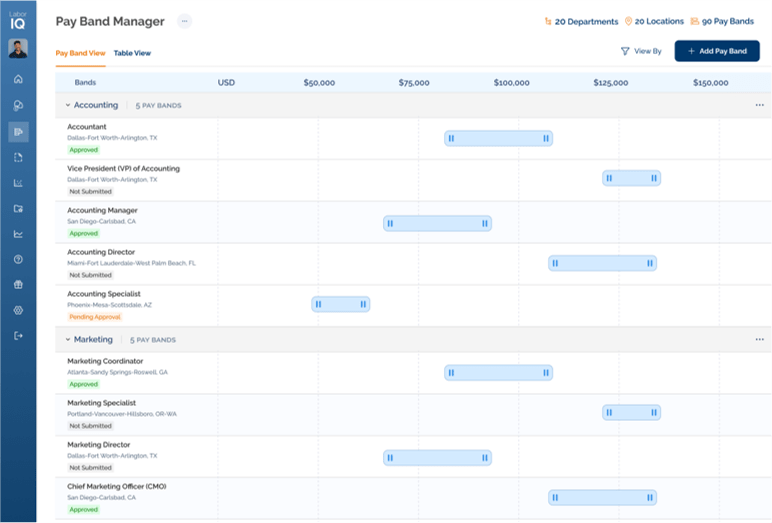
- To avoid manual tracking and potential errors, use modern software applications like LaborIQ that offer pay recommendations, pay band management, and running market updates that you can set.
- Performance-based progression opportunities rewarding high contribution
- Long-term incentive programs supporting retention objectives
- Career development integration with compensation advancement
- Regular communication of total rewards value and progression opportunities
Pay Transparency Maximization and Communication Strategies
Comprehensive Compensation Transparency Framework
Modern compensation structures must accommodate increasing demands for transparency while maintaining competitive positioning and individual privacy considerations.
Transparency Best Practices:
- Clear communication of pay philosophy and decision-making criteria
- Salary range disclosure policies balancing transparency with competitive sensitivity
- Regular town halls and communication sessions addressing compensation questions
- Manager training on compensation discussions and transparency requirements
- Employee resource accessibility providing self-service compensation information
When job levels, requirements, and expectations are clearly defined, employees understand what it takes to advance. This transparency builds trust and reduces perceptions of favoritism or arbitrary promotion decisions, which are major drivers of turnover.
HR’s Strategic Role in Transparency
HR departments serve as transparency champions, developing policies, training programs, and communication strategies that build trust while maintaining organizational competitiveness.
HR Leadership Responsibilities:
- Policy development balancing transparency with business requirements
- Manager training and development supporting effective compensation conversations
- Employee education programs explaining compensation philosophy and progression
- Continuous feedback collection and transparency program improvement
- Legal compliance ensuring transparency practices meet regulatory requirements
Technology Solutions and Implementation Support
Advanced Compensation Management Platforms
Modern compensation management requires sophisticated technology platforms that integrate market data, automate compliance monitoring, and provide analytical capabilities supporting strategic decision-making.
Technology Platform Requirements:
- Real-time market benchmarking and competitive analysis capabilities
- Automated pay equity monitoring and compliance reporting
- Integrated performance management and career development planning
- Comprehensive analytics and reporting for strategic decision support
- User-friendly interfaces supporting manager and employee self-service
LaborIQ: Leading Compensation Management Solutions
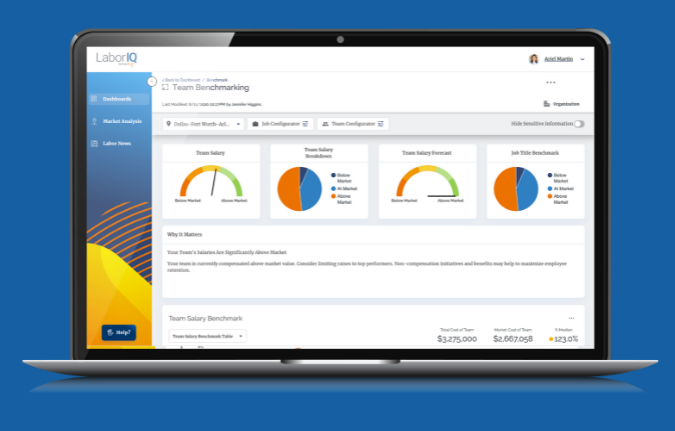
LaborIQ is a leading provider of comprehensive compensation management solutions that facilitate easier implementation and management of pay philosophies and compensation structures. The LaborIQ platform offers advanced analytics, market benchmarking, and workflow automation that streamline compensation management while ensuring compliance and supporting transparency initiatives.
LaborIQ Platform Advantages:
- Comprehensive market data integration from multiple authoritative sources
- Automated pay equity analysis and compliance monitoring capabilities
- Intuitive workflow management supporting efficient compensation decision-making
- Advanced reporting and analytics enabling strategic workforce planning
- Seamless HRIS integration reduces administrative burden and improves data accuracy
Organizations utilizing LaborIQ’s platform can search for compensation benchmarks and create pay bands in seconds.
Measuring Success and Continuous Improvement
Key Performance Indicators
Successful compensation structure implementation requires comprehensive measurement and continuous improvement processes.
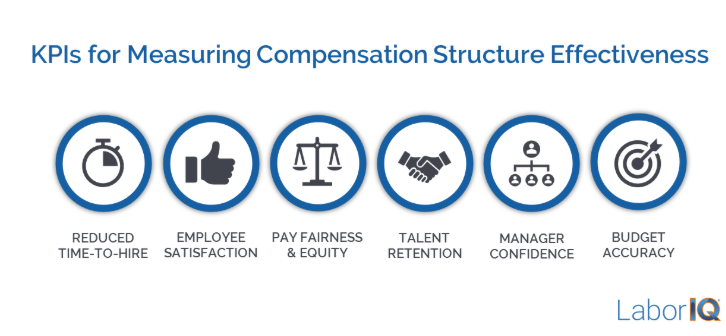
Essential Success Metrics:
- Time-to-hire reduction and offer acceptance rate improvements
- Employee satisfaction scores related to compensation fairness and transparency
- Pay equity metrics across demographic groups and organizational levels
- Retention rates and exit interview insights related to compensation satisfaction
- Manager confidence and competency in compensation decision-making
- Budget accuracy and cost control effectiveness
Ongoing Optimization and Evolution
Compensation structures require regular review and adjustment to maintain effectiveness and market competitiveness.
Continuous Improvement Processes:
- Annual market analysis and structure adjustment procedures
- Regular employee feedback collection and analysis
- Performance metric review and optimization opportunities
- Technology platform updates and capability enhancements
- Legal and regulatory compliance monitoring and adjustment
Conclusion
Developing comprehensive pay philosophies and implementing structured compensation systems represents a critical strategic initiative that impacts every aspect of talent management. HR departments that invest in systematic compensation structure development achieve measurable improvements in hiring efficiency, employee satisfaction, and retention outcomes while maintaining legal compliance and competitive positioning.
Creating salary bands that balance market competitiveness with internal equity requires sophisticated analysis, clear communication and ongoing optimization. The integration of advanced technology solutions like LaborIQ’s platform enables streamlined implementation and ongoing management of sophisticated compensation systems that support organizational success. Organizations prioritizing comprehensive compensation structure development position themselves for sustained competitive advantage in dynamic talent markets while meeting evolving workforce expectations for transparency and fairness.