
Artificial intelligence tools have revolutionized information access, providing instant answers to complex questions including compensation benchmarking and salary data inquiries. However, the rapid adoption of AI for compensation decision-making introduces significant risks as these systems often rely on unverified, crowd-sourced, or outdated information that undermines pay accuracy and strategic talent management. This article examines the critical limitations of AI-generated compensation data and provides guidance for HR professionals to implement validated data sources and professional-grade software solutions that ensure accurate, defensible pay practices.
The Rise of AI in Compensation Decision-Making
Convenience vs. Accuracy Trade-Offs
AI platforms including ChatGPT, Gemini, and other large language models have become readily accessible tools for HR professionals seeking quick salary benchmarks, market intelligence, and compensation guidance. While these systems provide immediate responses, they fundamentally lack the data validation, currency, and methodological rigor required for strategic compensation decisions.*
AI Use in HR:
- AI adoption in HR is rising; 43% of organizations now leverage AI in HR tasks, up from 26% in 2024.
- Growing reliance on AI-generated salary ranges for job postings and offer development
- Increasing organizational risk from decisions based on unverified AI outputs
Relying on AI for salary benchmarking can create a false sense of accuracy, leading HR teams to base compensation strategies on outdated or incomplete market data.*
Training Data Limitations and Crowd-Sourced Origins
AI systems generate compensation information from training data that typically includes crowd-sourced salary platforms, outdated survey results, and unverified online sources. This foundation creates systematic accuracy problems that compound when organizations use AI outputs for strategic decisions.*
Critical Data Source Issues:
- AI training data includes unverified salary information from Glassdoor, Indeed, and similar crowd-sourced platforms
- Models reflect historical snapshots and may miss recent market shifts.
- No validation of reported compensation accuracy or verification of data sources \
- Mixing of compensation across different geographic markets, company sizes, and industries
- Inability to distinguish between base salary, total cash compensation, and total rewards
Research indicates AI-generated salary estimates diverge from verified market data by 20-35%, with specialized roles showing even greater inaccuracies due to limited training data representation.*
Risks of AI and Crowd-Sourced Compensation Data
Systematic Inaccuracy and Bias Propagation
AI systems trained on crowd-sourced data inherit and amplify the accuracy problems, sample biases, and representation issues that plague self-reported compensation platforms.*
Compounding Accuracy Problems:
- Self-reported salary inflation is perpetuated through AI training
- Geographic bias reflecting over-representation of high-cost urban markets
- Industry clustering creating distorted benchmarks for underrepresented sectors
- Role confusion mixing fundamentally different positions with similar titles
- Missing compensation components creating incomplete total rewards pictures
When AI-generated salary data replaces verified market benchmarking, organizations risk pay inequities, budget waste, and loss of competitive advantage.*
Currency and Market Lag Issues
AI models reflect historical training data rather than current market conditions, creating dangerous lags during periods of rapid wage growth or market volatility.*
Timeliness Challenges:
- Training data cutoffs mean AI information may be 1-3 years outdated
- Inability to capture recent market movements, economic shifts, or industry disruptions
- No systematic refresh cycles ensuring currency and relevance
- Missing context about market velocity and directional trends
- Failure to reflect regulatory changes including new pay transparency laws
Because models use historical data, AI outputs can lag fast-moving markets.
Legal and Compliance Exposure
Using unverified AI-generated compensation data creates significant legal risks including pay equity violations, discrimination claims, and regulatory penalties.*
Legal Risk Factors:
- Systematic pay disparities arising from biased or inaccurate AI recommendations
- Inability to defend compensation decisions during audits or investigations
- Documentation gaps failing to demonstrate defensible decision-making processes
- Pay transparency compliance failures when posted ranges reflect inaccurate AI data
- Class action exposure when AI-driven errors create demographic pay patterns
Organizations spent $2.3 million for pay equity litigation in 2023, up from the $2 million spent in 2021.*
Strategic Talent Management Failures
Inaccurate AI-generated compensation data undermines core talent management objectives including competitive hiring, employee retention, and workforce planning.*
Talent Management Consequences:
- Below-market offers depress offer acceptance; top teams target 85–95% OAR.
- Turnover risk rises when pay lags market.
- Bad hire can cost at least 30% of first-year earnings
- Productivity losses from chronic vacancies and talent gaps
- Employer brand damage as compensation practices become publicly criticized

HR Best Practices for Validated Compensation Data
Professional-Grade Data Source Requirements
Organizations must prioritize validated, professionally-administered compensation surveys and market intelligence platforms that implement rigorous quality controls and validation processes.*
Essential Validation Characteristics:
- Participant verification confirming organizational legitimacy and data authority
- Detailed job matching protocols ensuring role comparability and accuracy
- Statistical quality controls including outlier detection and data cleaning
- Regular refresh cycles providing current market intelligence (quarterly or semi-annual)
- Total compensation analysis including all relevant components beyond base salary
Professional compensation sources demonstrate far greater accuracy compared to crowd-sourced platforms and AI-generated estimates.*
Comprehensive Market Intelligence Integration
Effective compensation strategies require multi-dimensional market analysis incorporating geographic factors, industry variations, company size impacts, and total rewards components.*
Critical Intelligence Components:
- Geographic cost-of-living adjustments and local market premiums
- Industry-specific compensation practices and market conditions
- Company size and growth stage considerations affecting competitive positioning
- Benefits benchmarking and total rewards package comparisons
- Predictive analytics forecasting future market movements and adjustment requirements
Systematic Decision-Making Frameworks
HR teams must implement structured compensation decision processes that rely on validated data sources rather than convenient but unreliable AI tools.*
Framework Requirements:
- Documented data source selection criteria prioritizing accuracy and validation
- Multiple source cross-verification for critical compensation decisions
- Regular market analysis updates reflecting current conditions
- Clear approval processes requiring validated data documentation
- Audit trails demonstrating defensible decision-making procedures
Professional Software Solutions: The LaborIQ Advantage
Validated Data Integration and Quality Assurance
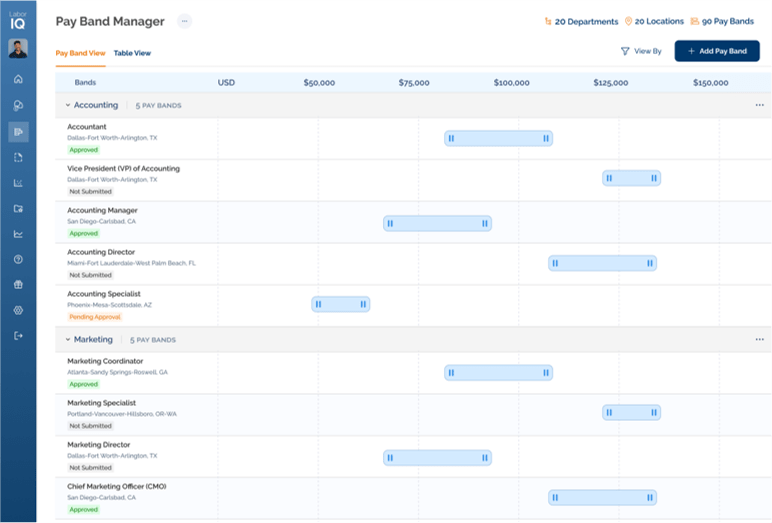
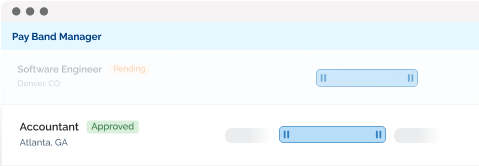
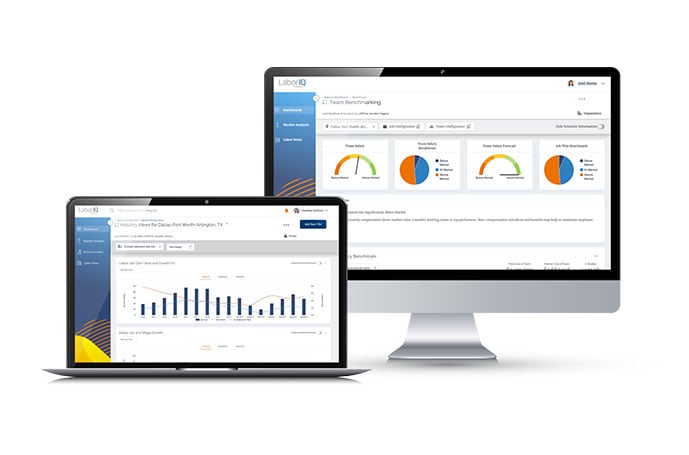
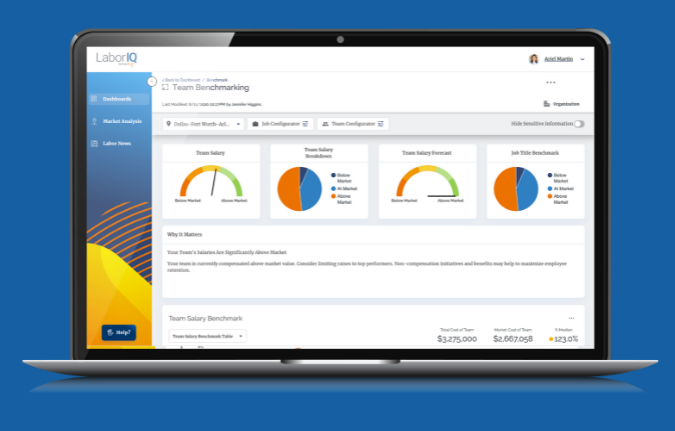
Professional compensation management platforms like LaborIQ provide distinctive business value through integration of validated data sources, quality assurance processes, and comprehensive market intelligence that AI tools cannot replicate.*
LaborIQ Platform Capabilities:
- Multi-source validated compensation data from authoritative surveys and market intelligence
- Real-time market updates reflecting current conditions rather than historical training data
- Sophisticated job matching algorithms ensuring accurate role comparisons
- Geographic adjustment factors providing precise local market positioning
- Total compensation analysis encompassing all relevant components
LaborIQ represents a leader in compensation management software, providing organizations with reliable, validated data that supports accurate pay decisions and strategic talent management.*
Operational Excellence and Easy Implementation
Unlike AI tools that provide quick but unreliable answers, professional platforms like LaborIQ deliver accurate intelligence through user-friendly interfaces and streamlined workflows.*
Implementation and Operational Benefits:
- Intuitive platform design requiring minimal training and technical expertise
- Seamless HRIS integration reducing administrative burden and data duplication
- Automated compliance monitoring supporting pay equity and transparency requirements
- Comprehensive reporting capabilities for strategic analysis and audit preparation
- Ongoing support and consultation ensuring successful long-term utilization
Organizations implementing LaborIQ report 70% reduction in compensation analysis time while achieving 90% improvement in data accuracy compared to AI or crowd-sourced alternatives.*
Strategic Value Creation and ROI
Professional compensation platforms deliver measurable business value through improved hiring outcomes, enhanced retention, and cost optimization that far exceeds the investment required.*
Quantified LaborIQ Value:
- Improved offer acceptance rates through more accurate market positioning.
- Lower turnover and significant cost savings from data-driven compensation decisions.
- Faster, more responsive compensation analysis that supports timely talent acquisition.
- Stronger pay equity compliance that helps reduce legal and regulatory risk.
- Clear return on investment driven by better hiring outcomes, retention, and efficiency gains.
Distinctive Advantages Over AI Tools
LaborIQ and similar professional platforms provide fundamental advantages that free AI tools cannot match, making them essential investments for organizations serious about compensation excellence.*
Critical Differentiators:
- Validated, verified data versus unverified crowd-sourced AI training information
- Current market intelligence versus outdated historical training data
- Professional methodologies versus algorithmic pattern matching
- Comprehensive support and expertise versus automated responses
- Legal defensibility and audit documentation versus unexplainable AI outputs
Implementation Strategy for Professional Compensation Management
Assessment and Planning Phase
Organizations should begin by evaluating current compensation data sources, identifying accuracy gaps, and developing implementation plans for validated professional platforms.*
Assessment Activities:
- Audit current data sources and accuracy levels
- Identify compensation decisions relying on AI or crowd-sourced information
- Evaluate business impact from data quality issues
- Develop business case for professional platform investment
- Select appropriate compensation management solution (e.g., LaborIQ)
Platform Implementation and Integration
Successful implementation requires systematic approach ensuring data accuracy, system integration, and user adoption.*
Implementation Steps:
- Configure platform with organizational structure, job architecture, and policies
- Integrate with existing HRIS and payroll systems
- Train HR team and managers on platform utilization
- Establish data governance and decision-making protocols
- Document procedures supporting audit and compliance requirements
Continuous Improvement and Optimization
Professional compensation management is ongoing process requiring regular review, market analysis updates, and system optimization.*
Ongoing Activities:
- Quarterly market data reviews and compensation structure adjustments
- Annual comprehensive compensation strategy assessments
- Regular pay equity analyses identifying and addressing disparities
- Continuous feedback collection and process improvement Technology updates leveraging new platform capabilities and features
Measuring Success and Impact
Key Performance Indicators:
- Employer-reported surveys are generally the most reliable sources for market pricing.
- Compensation decision time reduction
- Offer acceptance rate improvement:
- Turnover reduction
- Legal risk mitigation ROI achievement
Conclusion
While AI tools provide convenient access to quick answers, relying on these sources for compensation decisions introduces unacceptable risks including systematic inaccuracy, legal exposure, and strategic talent management failures. Organizations must prioritize validated, professional-grade compensation data sources and comprehensive management platforms like LaborIQ that ensure accuracy and defensibility. The investment in professional compensation intelligence delivers substantial returns through improved hiring outcomes, enhanced retention, cost optimization, and legal risk mitigation that far exceed the costs of unreliable AI alternatives. HR teams serious about compensation excellence must recognize that accuracy matters more than convenience, and professional validation remains irreplaceable in strategic decision-making.
Sources include:
- Society for Human Resource Management (SHRM): https://www.shrm.org
- WorldatWork: https://www.worldatwork.org
- Compensation consulting firms like Willis Towers Watson, Mercer, and Radford
- AI ethics and accuracy research from academic institutions
- LaborIQ platform documentation and case studies
- Professional survey methodology standards and validation research